
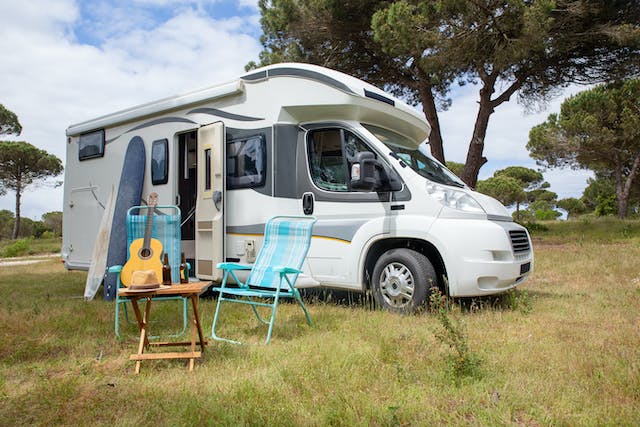
Congratulations on your new RV! Before hitting the road, grasp these crucial driving tips for a safe and smoother journey. Get familiar with RV driving nuances beforehand to navigate various terrains, turns, and parking challenges. Explore RVShare for test drives before making a purchase—it might change your preferences. Ready to embark? Dive into these 11 essential tips for first-time RV owners.
1. Embrace Practice Sessions
Navigating an RV feels like those early driving lessons in high school—awkward and uncertain. Don’t worry; it’s normal. Take heart; you’ll get the hang of it.
Just like learning any new skill, practice is key. Choose a spacious empty lot to rehearse turns, parking maneuvers, and tricky driving techniques.
Don’t expect expertise on your first drive. Commit to regular practice sessions. Spending dedicated hours behind the wheel will soon make you feel like a seasoned RV driver.
2. Fine-Tune Your Mirrors
Visibility is crucial when driving an RV. Take time to adjust all your mirrors before hitting the road. If needed, make frequent stops to fine-tune them for better rearview coverage.
3. Monitor the Weather Conditions
Not every journey offers clear skies. Weather can impact your RV drive significantly. Stay updated with a weather app. Rain or snow aren’t showstoppers, but exercise caution. If weather gets severe—heavy rain, snowstorms, thunder, lightning, strong winds—find a safe spot. Avoid driving in fog, ice, or hail. Remember, safety trumps pushing forward. It’s easier to fix a car than an RV after an accident.
4. Avoid Driving While Fatigued
When traveling from Point A to Point B in your RV, the distances can be substantial, spanning several states. Your urge to stick to a schedule might tempt you to ignore signs of fatigue, but it’s crucial to address them.
Operating an RV demands keen attention, especially for new drivers. Everything feels fresh and requires full alertness. Even a momentary lapse in focus can lead to an accident.
Prioritize your well-being. If fatigue hits, don’t fight it. Avoid excess caffeine; it can cause jitters, worsening the situation. Instead, opt for either a rest stop or ask a passenger who’s adept at RV driving to take the wheel. Safety matters, for you and other motorists.
5. Be Aware of Size Limits
During your RV journey, various road structures like tunnels or overpasses may become part of the adventure. However, worrying about whether your vehicle fits can be stressful.
To avoid this concern, know your RV’s measurements before you hit the road. If you’re unsure of the specifics, measure your parked RV—width and height. Most RVs range from 11 to 13 feet tall. Remember this when encountering tunnels or overpasses.
Encounter a structure with less clearance than your RV? Utilize GPS, either on your phone or a separate device, to reroute and avoid risking a stuck situation. It’s best to navigate an alternative path than risk getting wedged in an unsuitable passage.
6. Drive with Consideration
As you share roads with numerous other vehicles, practicing courtesy becomes crucial.
In a larger, less common RV, some drivers might feel uneasy. To ease tensions, signal your intentions well in advance. If a left turn is ahead, switch on your signal early and begin merging.
This proactive approach allows fellow drivers ample time to adjust, reducing accident risks.
Be familiar with your route and signal early—unlike a car, you can’t expect last-minute maneuvers in an RV. Rushing or assuming you’ll seamlessly merge might lead to missed turns, exits, and unsafe conditions for others on the road.
7. Embrace a Slower Pace
Driving an RV isn’t about rushing to reach a destination—it’s a leisurely experience. Experts suggest a speed of around 63-65 MPH, prioritizing a steady pace over speed.
Even on high-speed highways or with impatient drivers tailing you, maintain that consistent speed. Let others pass if they wish, but don’t compromise safety for their urgency.
Plus, driving at a steady pace has another perk: improved fuel efficiency.
8. Stay Right
Staying in the right lane while driving is standard practice, unless you’re abroad. For RV drivers, it’s more than just a rule.
On highways, RVs often feel out of place amid faster vehicles. To stay clear of others and maintain the speed limit, stick to the far-right lane.
Why? Firstly, it offers proximity to the shoulder in case of mechanical issues. Plus, it provides optimal visibility through your driver’s side mirror.
When exits approach, shift one lane left until all cars clear the ramp. Then, return to the far-right lane and continue smoothly.
9. Understand Braking in an RV
Though braking seems straightforward, it’s a different ballgame in a motorhome.
The weight—over 5,200 pounds without supplies—requires careful planning for stops. Your 7,000-pound vehicle demands anticipation, no sudden halts.
There are no abrupt stops; vigilance is crucial. Plan well ahead, as halting takes time. Ensure a clear path before braking.
10. Maintain Safe Distances
Avoid tailgating to ease fellow drivers’ nerves about your RV’s size.
How far? Aim for 400-500 feet—roughly 4-6 seconds behind cars. This distance allows safe braking. If someone tries closing the gap, increase the gap further for safety.
11. Know Your Tail Swing
Understanding your RV’s tail swing is crucial before hitting the road.
Tail swing? It’s the distance the rear part moves in the opposite direction of the front during turns. Your RV’s body doesn’t pivot simultaneously.
Calculate it: With a partner, align your RV with a white line in a safe, empty space. Turn slowly while they observe. Tail swings range from 18 to 30 inches, but sizes and turns vary. Practice to gauge and master this measurement for confident turns.